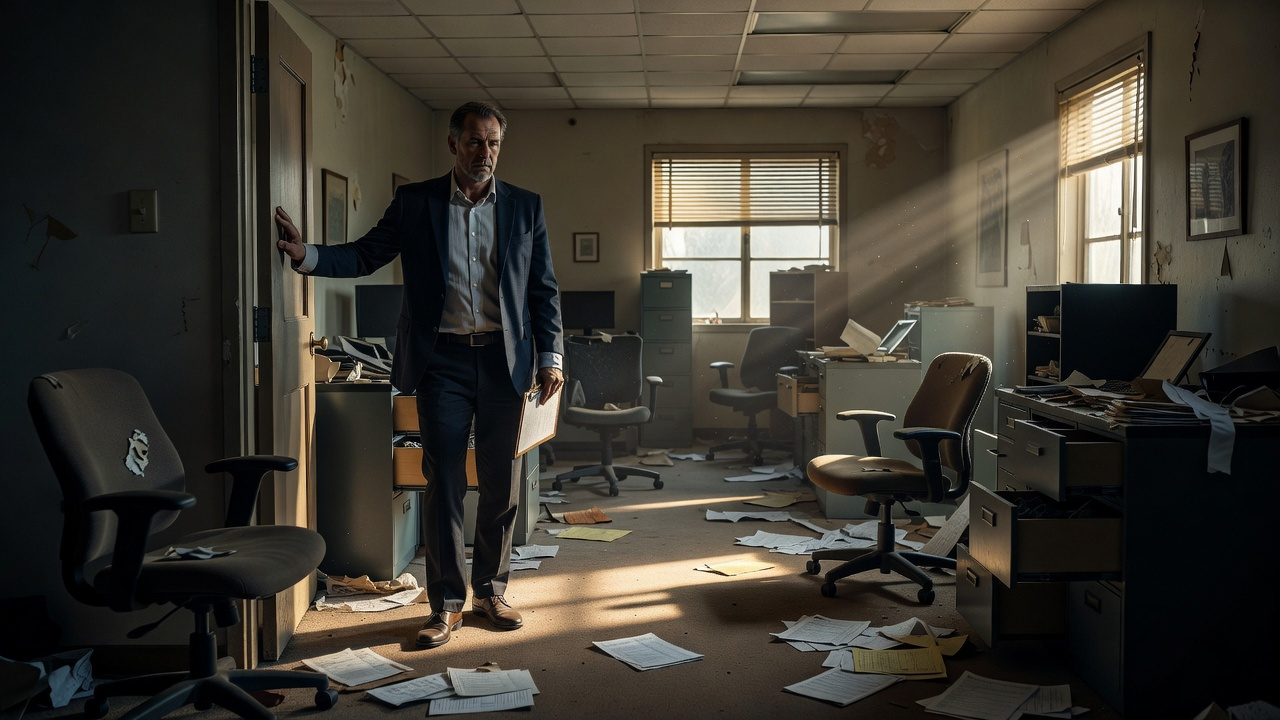
The honest answer is: not as soon as most people think. There’s no fixed number of days written into law that tells you when the boxes can come out and the skip can go on the drive. What actually decides the timing is authority, not etiquette. Before a single bin bag leaves that house, someone needs the legal standing to make that call, whether that’s an executor named in a will or an administrator appointed under intestacy rules, and often that authority doesn’t fully exist until probate or letters of administration have been granted. Grief has its own timeline. The law, unfortunately, doesn’t care about that one.
I’ve spoken to enough people who’ve been through this to know the instinct kicks in fast. The funeral’s barely over and someone in the family wants to “get it sorted,” partly out of kindness, partly because an empty house full of someone’s life is genuinely hard to sit with. But rushing in before the legal position is clear is exactly how families end up in disputes, or worse, in breach of their duties as a personal representative. So let’s slow down and actually map out what needs to happen, and when.
When Is It Legally Safe to Clear a House After a Death?
There isn’t a single trigger point. It’s more a sequence of checks, and skipping any of them is where things go wrong.
Wait for Confirmation from the Executor or Administrator
Don’t clear the house just because the funeral’s over. Wait until whoever’s handling the estate, the person legally responsible for it, has actually confirmed what can go. That might feel overly cautious when you’re standing in a house full of what looks like clutter, but the executor or administrator carries legal responsibility for the estate’s assets, and if items are disposed of before they’ve had a chance to inventory or value them, that’s a problem that lands squarely on their shoulders, not yours. If you’re not that person, resist the urge to “help” by clearing rooms unasked.
Check the Will and Any Written Wishes First
The will isn’t just about who gets the house or the savings account. It often names specific items, that jewellery, the car, a particular painting, and assigns them to named beneficiaries. Missing this step means potentially donating or discarding something someone was legally meant to inherit. It’s worth reading it properly, ideally with the solicitor who holds it or drew it up, before anything physical happens to the property.
Review Hospice or Pre-Arranged Plans
If there was hospice care involved before the death, some practical arrangements may already have been discussed and even agreed, sometimes down to what happens with medical equipment, furniture adaptations, or belongings earmarked for family. Check that plan before making big decisions, because plans made in those final weeks often reflect wishes that were never formally written into a will but still matter enormously to the family.
Who Has the Legal Authority to Deal with Belongings?
This is where a lot of confusion sits, and understandably so, because the terminology shifts depending on whether there’s a will.
Executors Named in a Will
An executor is the person named in the will to administer the estate. Their authority to act, technically, is confirmed once they apply for probate and receive the grant, though in practice they often start organising things beforehand. Legally, though, they shouldn’t be distributing or selling significant assets until that grant is in hand.
Administrators Under Intestacy Rules
When someone dies without a valid will, the estate falls under the rules of intestacy, and an administrator is appointed instead, usually the closest next of kin, spouse or civil partner first, then children, and so on down a fairly rigid hierarchy. That person applies for letters of administration rather than probate, but the effect is broadly similar: they become the personal representative with authority over the estate.
When No One Has Authority Yet
This is the awkward middle stage. Someone’s died, there’s a house full of belongings, and technically no one has the legal green light yet. During this window, the safest approach is to secure the property, not clear it. Photos, valuables, paperwork, all fine to protect. Skips and house clearance companies, not yet.
Do You Need Probate Before Clearing the House?
Not always, and this is where a lot of unnecessary anxiety creeps in.
When Probate Is Required
Probate is generally required when the estate includes property solely owned by the deceased, or when banks and other institutions ask for it before releasing funds above a certain threshold. According to the official government guidance on estate administration, this grant confirms the personal representative’s authority to deal with the deceased’s assets, including the house itself if it needs to be sold or transferred.
When Probate May Not Be Necessary
Smaller estates, jointly owned property with rights of survivorship, or estates where everything passes directly to a spouse can sometimes bypass probate entirely. HM Land Registry has published useful guidance on how jointly owned property title transfers differently depending on whether it was held as joint tenants or tenants in common, which affects whether probate touches the property at all.
Selling or Disposing of Assets Before Probate
Here’s the nuance people miss: everyday personal effects, clothing, furniture, books, ordinary household items, can usually be sorted and distributed without waiting for the grant. It’s the higher-value assets, property, significant savings, shares, that need to wait. Jumping the gun on selling a car or antique before probate is granted can create real complications with valuations for inheritance tax purposes.
How Do You Separate Personal Effects from Estate Assets?
This distinction trips up almost everyone doing this for the first time.
Items Covered by the Will or Intestacy Rules
Specific bequests named in a will go to whoever they’re named for, full stop. Everything else, the “residue,” gets divided according to either the will’s instructions or, if there’s no will, the rules of intestacy.
Everyday Belongings vs Valuable Assets
| Category | Examples | Typical Treatment |
|---|---|---|
| Everyday belongings | Clothing, books, kitchenware | Sort and distribute early, low risk |
| Sentimental items | Photos, letters, small keepsakes | Share among family, rarely disputed legally |
| Valuable assets | Jewellery, antiques, art | Requires valuation before distribution |
| Financial assets | Bank accounts, shares, property | Wait for probate or letters of administration |
Items That Need Formal Valuation
For inheritance tax purposes, HMRC expects a reasonably accurate valuation of the estate’s contents, and their internal manual on valuing a deceased person’s property and possessions makes clear that guesswork isn’t good enough for higher value items. Anything that might push the estate over the inheritance tax threshold, decent jewellery, antiques, a meaningful art collection, needs a professional eye on it before it’s sold, donated or divided up.
What Are the Practical Steps for Sorting and Distributing Belongings?
Once authority is confirmed and the legal groundwork is done, the physical process actually becomes fairly manageable if you approach it in order rather than all at once.
- Secure the property first, change locks if needed, redirect post, and keep all bills and paperwork together in one place rather than scattered across rooms.
- Sort belongings into four honest categories: keep, distribute to named beneficiaries, donate to charity, and dispose as waste.
- Photograph anything of uncertain value before deciding its fate, it protects the personal representative if questions arise later.
- Keep a written record of what went where, who received what, and any items sold, including for a car boot sale or informal sale to family friends.
Distribution itself should follow either the will’s specific gifts first, then the residue according to its instructions, or, in intestacy cases, strictly by the inheritance hierarchy Citizens Advice sets out clearly.
How Do You Handle Family Disagreements Over Belongings?
Grief has a habit of turning small disagreements into lasting fractures, and belongings are often where that plays out.
Common Causes of Disputes
Sentimental value rarely matches financial value, and that mismatch causes most of the friction. Two siblings both wanting the same watch, or disagreement over whether something was “promised” verbally, these situations are common and rarely have a clean legal answer unless it’s written down somewhere.
Practical Ways to Resolve Disagreements
Sometimes it’s as simple as taking turns choosing items, or agreeing that sentimental pieces get photographed and shared as prints so no single person “wins.” Auction or professional valuation can also settle disputes over financial value fairly, removing the emotional guesswork from what something’s actually worth.
When to Involve a Solicitor
If there’s no will, real family disagreement, or genuine uncertainty about who actually has authority, speaking to a local solicitor before clearing anything is the sensible move. A short consultation is a lot less painful than guessing wrong and spending months afterwards untangling a mess that didn’t need to happen. The Law Society’s solicitor finder is a reasonable starting point if the family doesn’t already have one.
When Should You Get Professional Help with a House Clearance?
There’s a point where doing it all yourself stops being practical, and that point comes sooner than most people expect.
Hiring a House Clearance Company
Once belongings are sorted and distributed, what’s left, furniture, general waste, unwanted household items, is usually best handled by a professional service. This is genuinely one of those situations that calls for house clearance rather than a simple rubbish removal job, particularly when the property needs to be prepared for sale or handed back to a landlord. Knowing how to sort a loved one’s belongings beforehand makes the whole process considerably smoother.
Valuation Services for Antiques and High-Value Items
For anything that might carry real financial or historical value, auction houses or specialist valuers should be brought in before a clearance team ever sets foot in the room. It’s far easier to remove an item from the clearance pile than to try and claw it back after it’s gone.
Costs to Expect
Costs vary hugely depending on the size of the house and volume of items, but a professional clearance company will typically give a quote based on a walkthrough, factoring in how long the clearance itself is likely to take and whether donation, recycling or waste disposal routes are involved. Understanding typical clearance fees can help you budget effectively.
What If the Property Was Rented?
Rented properties add a time pressure that owned homes don’t have. If you are unsure about the process, you can consult an end-of-tenancy clearance guide to help manage these requirements.
Notifying the Landlord
The landlord needs to be told promptly, both out of courtesy and because ongoing rent liability doesn’t simply stop the day someone dies, it typically continues until the tenancy is formally ended.
Clearing Within Tenancy Obligations
Tenancy agreements usually specify the condition the property needs to be returned in, and clearing needs to happen within whatever notice period applies, which can feel rushed compared to the more flexible timeline of an owned home going through probate. If you are managing a commercial space, you should follow a commercial lease exit checklist to ensure you meet all your obligations.
Returning Keys and Ending the Tenancy
Once everything’s cleared, keys go back, meter readings get taken, and the tenancy is formally closed. It’s worth confirming this in writing with the landlord or letting agent so there’s no dispute later about when responsibility actually ended.
What If You Want to Keep Sentimental Items?
Not everything needs to be logged like an asset on a spreadsheet, but a little structure helps.
Recording What You Keep and Why
A simple written note, what was kept, by whom, and why, protects everyone if questions come up later, particularly in larger families where memory of who agreed to what tends to blur over time.
Sharing Sentimental Items Fairly Among Family
Splitting photo albums, digitising letters, or agreeing a rotation for shared keepsakes are all reasonable ways to make sure sentimental items don’t become the flashpoint that financial assets so often are.
What If There’s No Will and No Clear Authority?
This is genuinely the situation where I’d tell anyone to stop and read a guide to house clearance before doing anything else.
Why You Should Speak to a Solicitor First
No will, family disagreement, or uncertainty about who has authority is a combination that calls for a solicitor’s involvement early, not as a last resort. Guidance from specialists on who can authorise a house clearance during probate makes clear how much confusion exists around this exact scenario, and how often it leads to genuine legal risk for whoever acts without that clarity.
Risks of Clearing a House Without Legal Clarity
Acting without confirmed authority can mean personal liability for anyone who disposes of assets that later turn out to belong, legally, to someone else entirely. It’s not a technicality worth ignoring.
Where Can You Find Support During This Process?
Beyond the legal side, there’s genuine emotional weight to clearing a family home, and support exists for both. Citizens Advice’s guide to dealing with the financial affairs of someone who has died is a solid starting point for the practical side, while Age UK’s money and legal advice service offers both guidance and a genuinely reassuring human voice on the phone for anyone finding the whole administration process overwhelming.
FAQ
Can I clear a house before probate is granted? Everyday personal effects, yes, generally. Property, significant financial assets or anything requiring formal valuation, no, not until probate or letters of administration confirm authority.
Who is legally responsible for the house after someone dies? The executor named in the will, or the administrator appointed under intestacy rules, becomes the personal representative and carries that legal responsibility.
What happens if there’s no will? The estate is distributed according to the rules of intestacy, and an administrator, usually the closest next of kin, must apply for letters of administration before dealing with major assets.
Do I need a solicitor to clear a house after a death? Not always, but if there’s family disagreement, no will, or uncertainty about who holds authority, a short consultation is worth far more than the risk of getting it wrong.
Conclusion
Clearing a house after someone dies isn’t really about boxes and bin bags. It’s about sequencing, knowing who has the authority, checking the will, confirming probate status, and only then working through belongings methodically. Rush it, and you risk legal complications that outlast the grief itself. Slow down, get the right advice at the right moments, and what feels overwhelming at the start becomes, eventually, just a series of manageable steps.