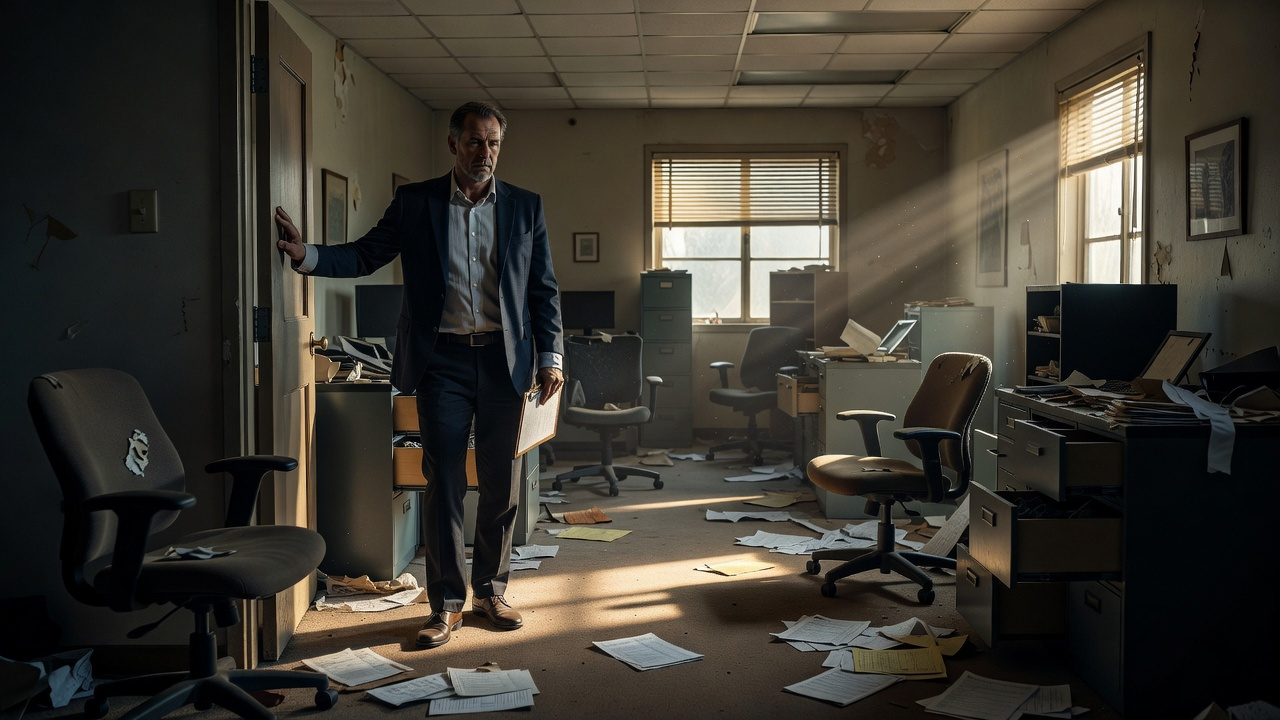
Clearing a Property When You Live Hundreds of Miles Away
You inherit a house. It’s three hundred miles away, or it’s in Portugal, or it’s your late uncle’s cottage in a village you visited twice as a kid. Either way, someone now expects you to sort it out, and the idea of driving up (or flying out) just to stand in a cold hallway and hand over a set of keys feels almost comically pointless. It isn’t pointless to grieve. It’s pointless to travel for logistics that can, frankly, be handled from your kitchen table.
Remote house clearance exists precisely for this. A licensed clearance firm can quote, sort, remove and confirm completion of an entire property without you ever setting foot inside it, provided the access and paperwork are arranged properly beforehand. That’s the short answer. The longer answer, the one that actually matters when you’re the executor staring at a probate file and a set of keys you don’t have, takes a bit more unpacking.
What Is Remote House Clearance for an Inherited Property?
At its core, remote clearance is exactly what it sounds like: a professional clearance company manages the entire process, from quotation through to final disposal, while the family or executor stays elsewhere. No supervision on site, no need to book flights or annual leave, no standing around while someone else’s team moves furniture out of a house that used to smell like your grandmother’s cooking.
How it differs from standard house clearance
Standard clearance assumes someone’s there. Someone points at the wardrobe and says “that goes,” someone answers the door when the van arrives. Remote clearance strips that out entirely and replaces it with photo evidence, video walkthroughs and written instructions agreed in advance. It’s not a lesser version of the service. It’s a different workflow built around distance, and honestly it’s become the default for a huge number of probate cases simply because families are scattered further than they used to be.
Who typically arranges it
Usually it’s the executor named in the will, though sometimes it’s a solicitor acting on the family’s behalf, particularly where there are multiple heirs who can’t agree on logistics or simply live too far apart to coordinate a joint visit. Occasionally it’s a beneficiary who’s inherited outright and just wants the place emptied before a sale, often consulting a probate house clearance resource to ensure they follow the correct legal steps.
When remote clearance makes sense
It makes sense whenever travel costs, time off work, or plain geography make an in-person clearance impractical. If you’re inheriting a house in Yorkshire while you live in Cornwall, that’s a six-hour drive each way for something a licensed team can photograph and manage without you. If the property is abroad, clearing a property when you live hundreds of miles away is the calculation isn’t even close.
How Do You Arrange Key Access Without Visiting the Property?
This is the bit people worry about most, and reasonably so. You can’t clear a house you can’t get into, which is why many families ask if they must attend.
Collect keys via solicitor or estate agent
The cleanest route is usually through whoever’s already holding a set, typically the solicitor administering the estate or an estate agent if the property’s being marketed for sale. Reputable clearance firms are used to arranging pickup directly from these third parties, which removes you from the equation entirely. You’re coordinating by phone and email while the actual key exchange happens between professionals who deal with this weekly.
Grant access to a trusted local contact
Where there’s no solicitor holding keys, a neighbour, a friend of the deceased, or another relative living closer can act as the local point of contact. This isn’t ideal as a long-term arrangement, but for a single handover it works fine, provided you trust them and the clearance firm confirms identity on both ends.
Verify identity and legal authority with the clearance firm
Before any of this, the firm should ask for proof that you’re legally entitled to instruct clearance in the first place. That usually means a grant of probate, or at minimum a copy of the will naming you as executor. This isn’t bureaucracy for its own sake. It’s what stops a rogue operator, or worse, an estranged relative, from emptying a house they have no legal claim over. If you’re unsure what documentation you need at this stage, it’s worth checking our guide on being present during clearance, which covers the access question in more depth.
What Steps Are Involved in a Remote Clearance Process?
Once access is sorted, the actual clearance follows a fairly predictable sequence, though the details shift depending on the size of the estate and how much sentimental sorting is needed first. If you are unsure of the steps involved, it is helpful to learn how to prepare a property for house clearance.
Get a remote quote from photos or video
Most firms will quote based on a video call walkthrough or a set of photographs sent by whoever has current access, whether that’s a neighbour, estate agent, or you on a previous visit. This is standard practice now, and it’s usually accurate enough that final costs rarely swing wildly from the estimate, so long as nothing’s been hidden behind a locked shed you forgot existed.
Agree what stays, sells, donates or gets disposed of
This is the conversation worth having properly before anyone touches a single box. You’ll want to specify, in writing, what gets kept aside, what’s donated to charity, what’s sold if it has resale value, and what simply goes to waste disposal or recycling. Getting this wrong, or leaving it vague, is how families end up discovering months later that a set of decent furniture was skipped when it could have been sold.
Confirm completion with photo evidence
The job isn’t done until you’ve seen it’s done. Before-and-after photographs have become something of an industry standard precisely because they reassure families who can’t check the work themselves. If a firm can’t or won’t provide this, that’s a red flag worth taking seriously.
How Do You Protect Sentimental and Valuable Items From Afar?
This is where I’d push back on anyone who treats “remote” as a magic word that removes all risk. It doesn’t. Handing your late relative’s entire house over to a crew you’ve never met, sight unseen, and hoping for the best, is not the same as arranging things properly.
Set aside documents, photos and heirlooms first
Before any clearance team goes near the property, someone, whether that’s you on an earlier visit, a family member nearby, or a trusted friend, should physically separate out legal paperwork, photo albums, jewellery and anything with obvious sentimental or financial weight. One missed document, a life insurance policy buried in a drawer, say, causes far more hassle later than the entire clearance fee combined.
Ask for a separate valuables sorting process
Good firms build this into their workflow anyway. Ask specifically how they handle items that might be overlooked, cash found in coat pockets, old coins, jewellery tucked into boxes. A structured sorting process, where such items are flagged and set aside rather than bagged up with everything else, is the difference between a firm you trust and one you’re gambling on.
Arrange delivery or storage for retained items
Once things are sorted, you’ll need a plan for what happens to the keep pile. Some firms will post smaller items directly to you. Larger furniture pieces might need a local courier or short-term storage until you can arrange collection. Sort out this logistics question before clearance day, not after.
How Do You Choose a Trustworthy Remote Clearance Company?
| What to Check | Why It Matters |
|---|---|
| Environment Agency licence | Confirms legal waste carrier status, avoiding fly-tipping liability |
| Verified reviews | Shows real experience from other bereaved families, not marketing copy |
| Charity and recycling rates | Indicates responsible disposal rather than blanket landfill dumping |
| Photo evidence policy | Confirms remote transparency is built into their process |
Check Environment Agency licensing
Any firm handling waste from a UK property needs to be registered, and you can verify this yourself through the public register for environmental information, which lets you check a carrier’s licence before you commit to anything. Skipping this step and discovering later that the “clearance firm” fly-tipped half the contents in a layby is a genuinely awful position to be in as an executor, since liability can trace back to whoever instructed the clearance.
Read verified reviews from bereaved families
Trustpilot and similar platforms consistently show that families managing an estate from a distance rate communication above almost everything else. It’s not the price, not even the speed. It’s whether someone kept them updated without being chased for it.
Ask about recycling and charity donation rates
Firms that divert a high percentage of goods away from landfill, either through charity donation or recycling, tend to be the more conscientious operators generally, and it means the house is cleared responsibly without you needing to supervise any of it. Our piece on what actually happens to items after a clearance goes into this in more detail if you want the fuller picture.
What Changes When the Inherited Property Is Overseas?
Everything gets harder, frankly, once you’re dealing with a foreign property rather than a UK one. The clearance logistics are almost the smaller problem.
Work with a local lawyer or notary
You’ll need someone qualified in the local jurisdiction, a notary in France or Spain, for instance, since UK probate doesn’t automatically transfer authority abroad. This person becomes your on-the-ground representative for everything from accessing the property to dealing with local utility accounts.
Understand forced heirship and local inheritance rules
Countries operating under civil law, much of continental Europe included, apply forced heirship rules that dictate a fixed share of an estate must go to children or a surviving spouse, regardless of what the will says. This can completely upend expectations if the deceased assumed UK-style testamentary freedom applied everywhere. It doesn’t, and finding this out after the fact is a genuinely painful surprise for families.
Report foreign assets to HMRC
Even if the property itself sits entirely outside the UK, if the deceased was UK domiciled, the estate’s worldwide assets, foreign property included, typically need declaring for inheritance tax purposes. This trips people up constantly. Owning a foreign property doesn’t remove it from the UK inheritance tax net just because it’s not on UK soil.
How Does Inheritance Tax Apply to a Foreign Property?
This is probably the single most misunderstood part of inheriting a house abroad, so it’s worth being direct about it.
Check UK inheritance tax rules on overseas estates
If the deceased was domiciled, or deemed domiciled, in the UK at death, their entire estate, including any overseas property, generally falls within the scope of UK inheritance tax. Domicile isn’t the same as residence or nationality, and it’s a surprisingly nuanced legal concept, one that’s tripped up plenty of executors who assumed nationality settled the question.
Understand double taxation treaties
Where a foreign country also levies its own estate or inheritance tax on the same property, a double taxation treaty may allow relief so the estate isn’t taxed twice on the same asset. Not every country has such a treaty with the UK, so this needs checking on a case by case basis rather than assumed.
Get probate recognised for foreign assets
A UK grant of probate doesn’t automatically carry legal weight overseas. Depending on the country, you may need a separate local grant, or a resealed version of the UK grant, before you can legally sell or transfer the foreign property. This is where cross-border legal advice earns its fee, frankly, because getting it wrong causes delays measured in months, not weeks. For families navigating currency transfers and reporting obligations tied to receiving funds from an overseas estate, Wise’s guide on cross-border inheritances is a genuinely useful starting point.
What Problems Commonly Arise During Remote Clearance?
A few issues crop up again and again with families managing this from a distance. Delayed access is one, particularly when a solicitor is juggling multiple estates and key handover slips down their list. Miscommunication over what counts as “valuable enough to keep” is another, since one person’s clutter is another’s cherished keepsake. Currency and payment logistics cause friction too, especially for overseas beneficiaries paying a UK firm in a different currency. And occasionally, disputes between heirs over disposal decisions surface only once clearance has already started, which is exactly why agreeing instructions in writing beforehand matters so much.
How Do You Prepare a Cleared Property for Sale or Handover?
Once the house is empty, there’s usually a short list of remaining tasks before it’s genuinely market-ready or handover-ready. A proper valuation, ideally from a RICS-qualified surveyor rather than an informal estate agent estimate, matters both for inheritance tax purposes and for setting a realistic sale price. Utilities need transferring or cancelling, unoccupancy insurance should be arranged if the sale process is likely to drag on, and any minor repairs flagged during clearance, damp patches, a leaking gutter, that sort of thing, are worth addressing before viewings start. Our step-by-step guide to how house clearance actually works covers this handover stage in more detail, alongside typical clearance timeframes worth budgeting for.
Follow-Up Questions Families Often Ask
People usually want to know whether they can sell items themselves before the clearance team arrives (yes, generally, provided it’s noted in the agreed inventory), whether inheritance tax needs settling before a foreign property can be sold (usually yes, since HMRC expects the liability addressed as part of probate), and whether a local solicitor abroad is strictly necessary or just recommended (in most civil law jurisdictions, it’s effectively unavoidable). For a broader sense of typical costs and what’s included, our breakdown of UK clearance pricing is worth a read before you request quotes.
Conclusion
Clearing a house you can’t physically get to isn’t the ordeal it once was, provided you treat the remote element as a process to manage carefully rather than an excuse to hand everything over blind. Sort the sentimental and financial items first, check licensing before you check price, and if the property sits abroad, get proper legal advice on forced heirship and inheritance tax before you assume UK rules apply. Do that, and the distance stops being the obstacle it first felt like.