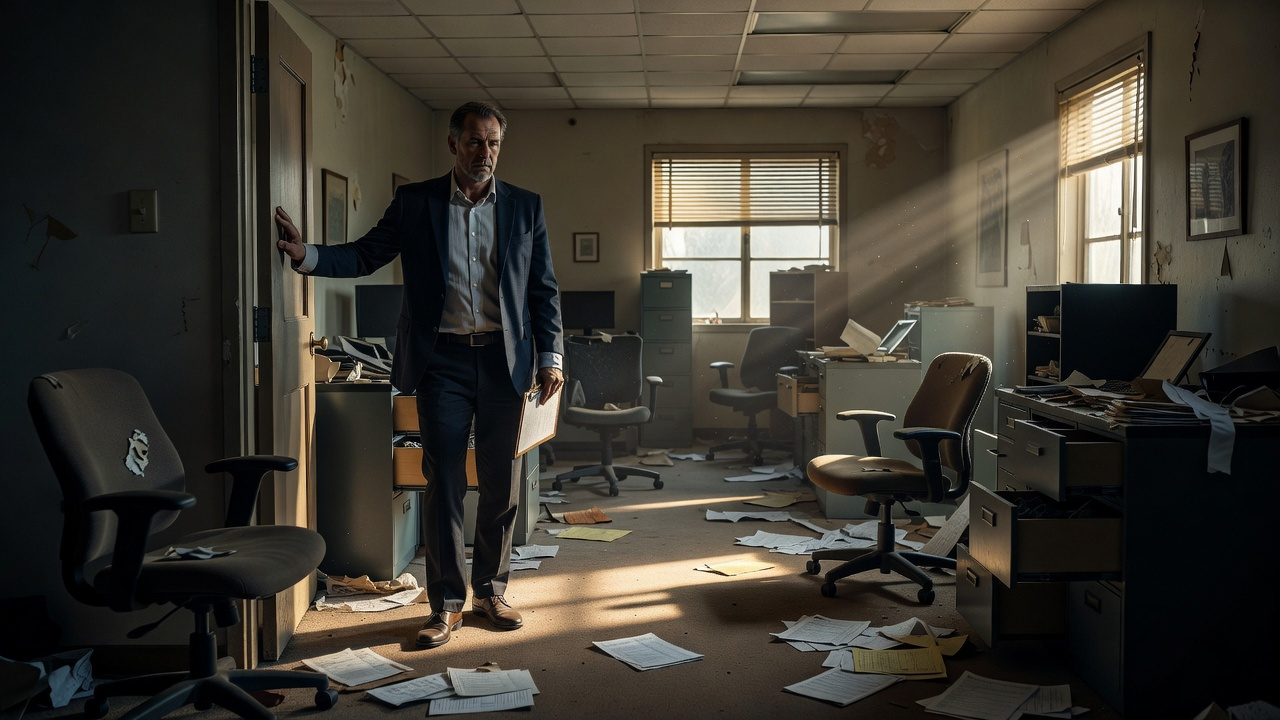
Right, let’s get one thing straight before anything else. Clearing a house after someone dies is not the same job as clearing a house because someone’s moving to Spain or downsizing into a bungalow. It looks similar from the outside, same vans, same skips, same blokes in hi-vis carrying out a wardrobe, but underneath it’s a completely different animal. A bereavement house clearance is a legal process, an emotional process, and a logistical one all happening at the same time, and if you treat it like a straightforward removal job you’ll end up making mistakes you can’t undo. Photos get binned. Cash turns up inside a coat pocket weeks after the skip’s gone. Family members fall out over a teapot nobody even liked. So the honest answer to “how do you do this properly” is: slowly, legally, and with someone in the room who isn’t grieving quite as hard as you are.
What Does Bereavement House Clearance Involve
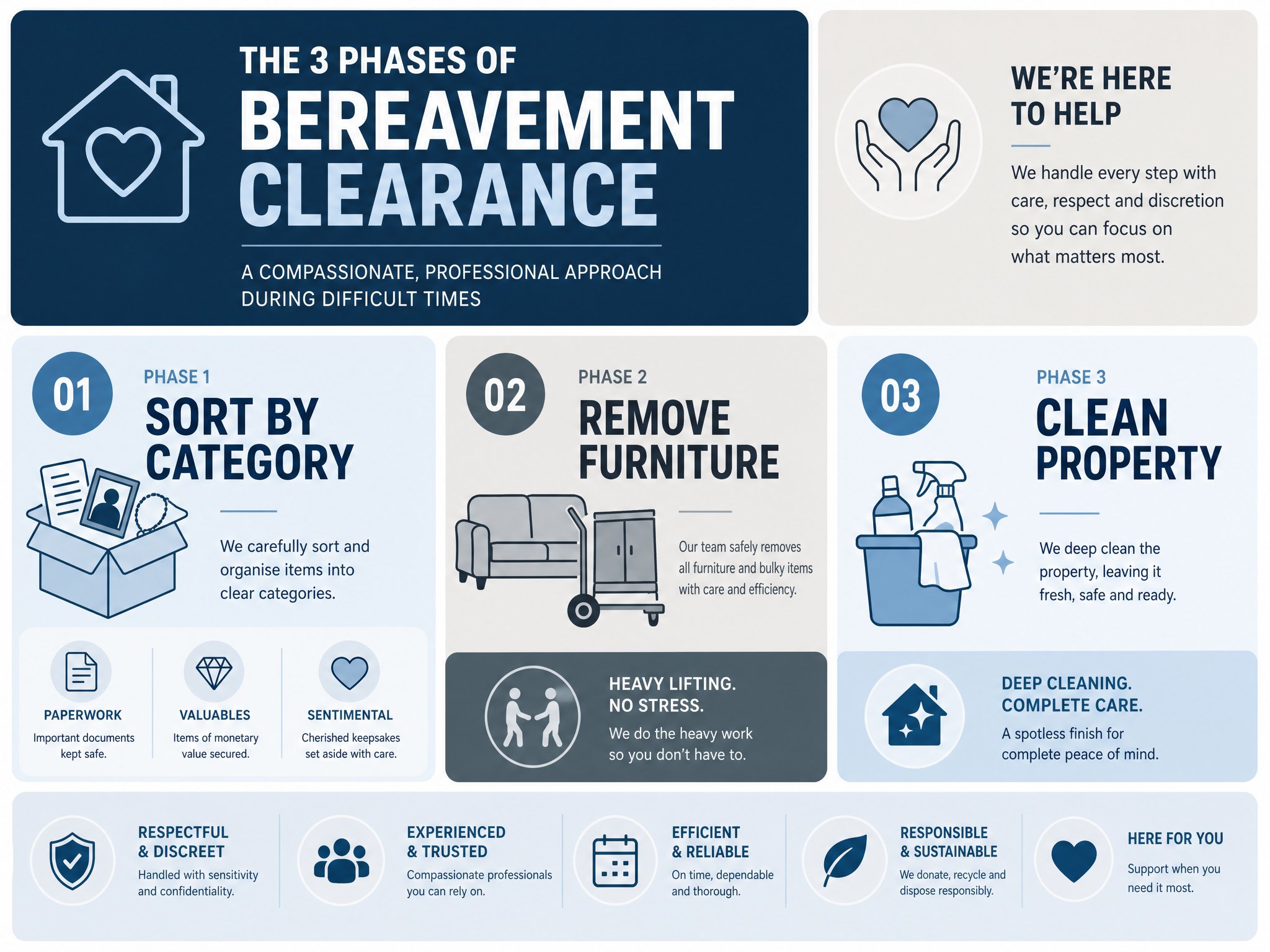
At its core, a bereavement clearance means going through every room of a property that belonged to someone who’s died and deciding, item by item, what happens next. That’s not one task, it’s about four or five running in parallel, and most families underestimate how long it actually takes until they’re three hours into the airing cupboard wondering why they haven’t even touched the loft yet.
Sorting Belongings By Category
The sensible way in is by category, not by room. Paperwork first, because that’s where you find bank statements, insurance policies, and the odd surprise like premium bonds nobody knew existed. Then valuables, jewellery, watches, anything that might need a proper appraisal. Then the sentimental stuff, letters, photo albums, the birthday cards someone kept for thirty years for reasons only they understood. Furniture and general household items come last, because frankly they’re the easiest decisions. A sofa is a sofa. A shoebox of handwritten letters is not.
Removing Furniture And Household Items
Once the meaningful stuff has been pulled out and set aside, the bulk removal can start properly, and this is where a professional house clearance team earns its money. Wardrobes, beds, white goods, garden sheds full of tools that haven’t moved since 2009, it all needs shifting, and a lot of it needs lifting through doorways that weren’t built with a three-piece suite in mind. If you’re wondering what actually gets taken away and what doesn’t, it’s worth reading through what a house clearance company actually removes before assuming everything simply disappears in one go.
Cleaning And Preparing The Property
After the physical clearing, the property usually needs cleaning, sometimes deep cleaning, before it can go on the market or be handed back to a landlord. Carpets, kitchens, bathrooms that haven’t seen a professional clean in years if the person who lived there had mobility issues towards the end. It’s not glamorous work but it matters, particularly if the house needs to be presentable for valuers or estate agents fairly quickly. If you are managing a rental, you might also need to consider managing a rental transition.
When Should You Start Clearing The House
Here’s where I’ll push back on the instinct a lot of families have, which is to get it done and dusted immediately. Don’t. There’s no prize for speed here, and rushing tends to cause more damage than it prevents.
Securing The Property First
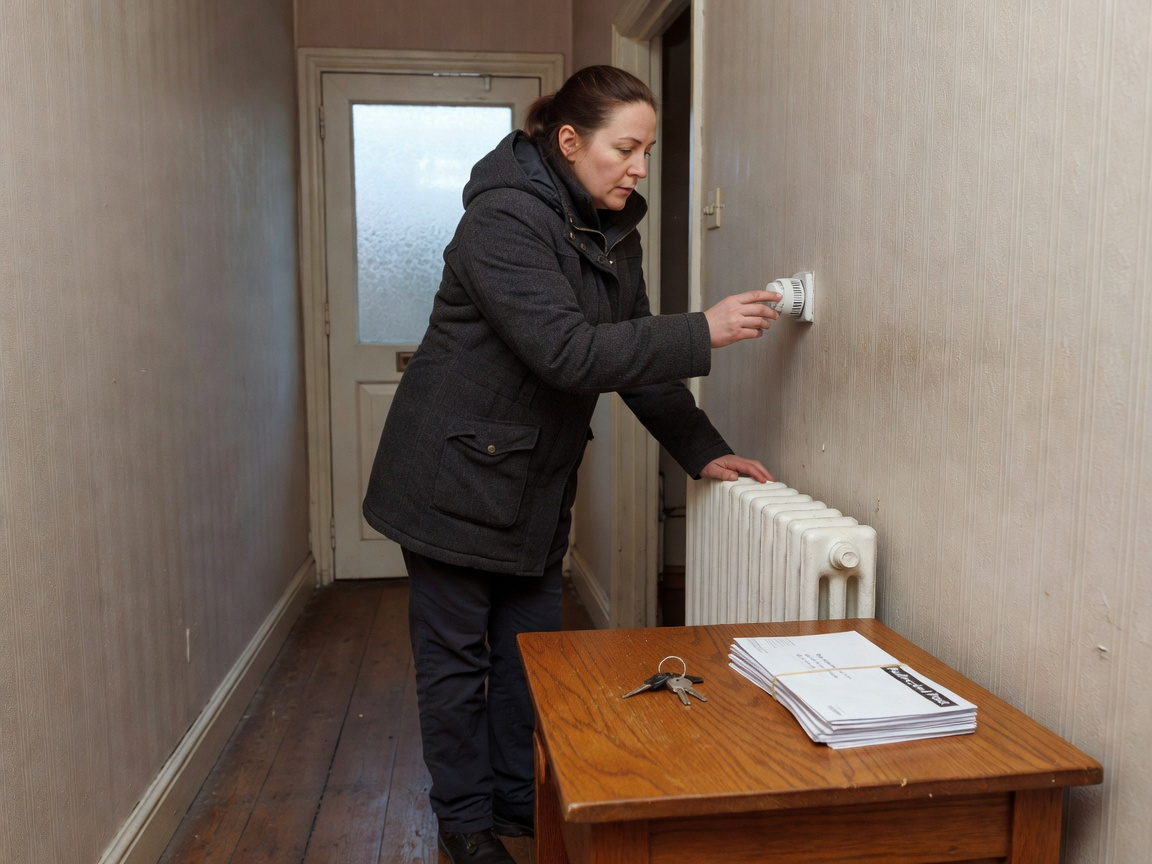
Before anything gets sorted or removed, the property itself needs securing. Locks changed if there’s any doubt about who has keys, post redirected, heating checked in winter so pipes don’t freeze. It’s also worth checking your insurance situation early, because standard home insurance policies often have exclusions once a property sits empty past a certain point, and an unoccupied claim can be refused if nobody’s flagged the change in circumstances. The government’s own guidance on when someone dies runs through these early practical steps in more detail, and it’s a genuinely useful starting point when you’re too frazzled to think straight.
Waiting For Probate If Needed
This is the bit people get wrong constantly, and it’s not a small detail. If the estate needs probate, and most estates above a certain value do, then chattels of any real worth technically need to be valued before they’re sold, gifted, or given away, because that valuation feeds directly into the inheritance tax calculation. Clear the house too early and you risk having already disposed of something HMRC needed accounted for. The official guide on valuing the estate of someone who died sets out exactly what counts and how it should be assessed, and it’s worth a read even if you think the estate’s too modest to matter, because “modest” is doing a lot of heavy lifting in that sentence for some families.
Avoiding A Rushed Single Weekend Clearout
I’ll say this plainly because I think it needs saying plainly. Trying to empty an entire house in one weekend, with the whole family turning up, boxes everywhere, someone crying in the kitchen while someone else argues about a set of coasters, is a recipe for a fight that outlasts the grief itself. Short, planned visits work better. Two or three hours at a time, one or two rooms, then stop. Nobody makes good decisions about their late father’s record collection at hour six of a Saturday.
How Do Professionals Handle Sentimental Items
This is honestly where the difference between a decent clearance firm and a cowboy outfit becomes obvious fairly quickly.
Setting Aside Cash And Valuables
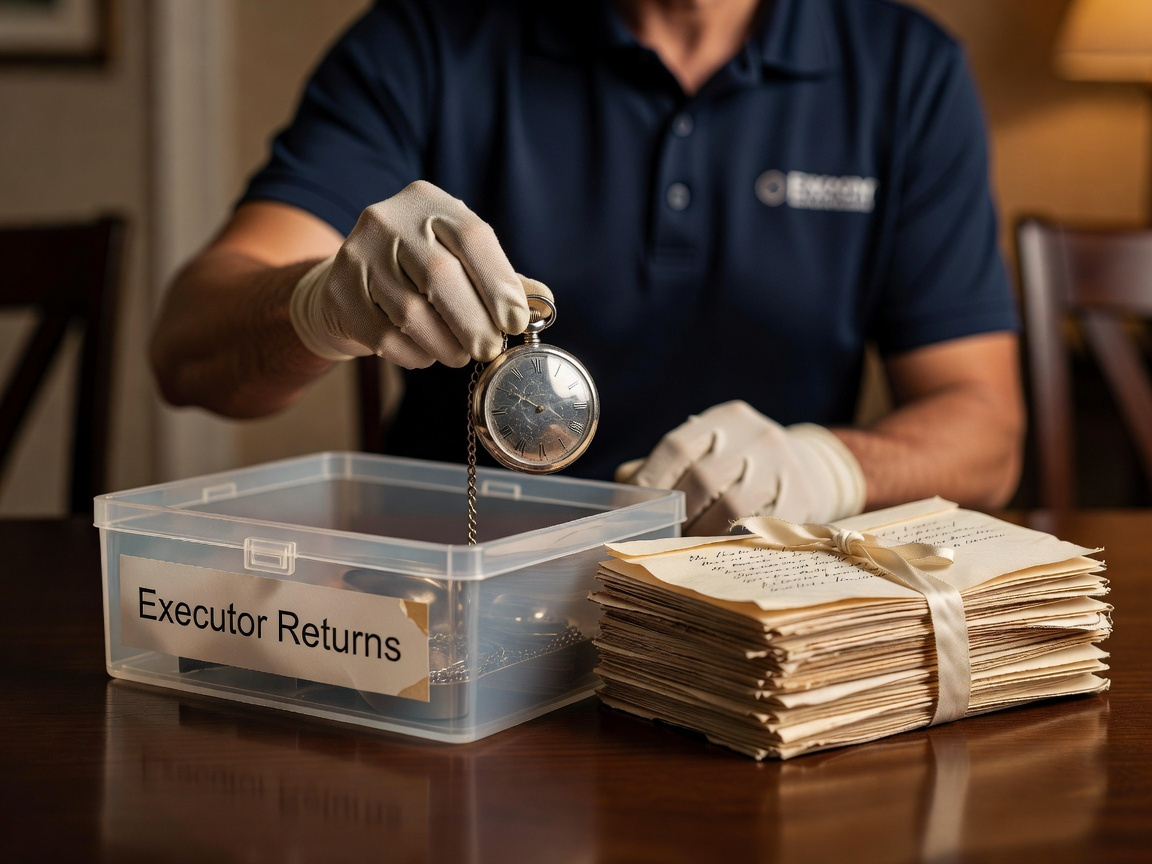
Reputable clearance teams train staff to physically stop and set aside anything that looks like cash, jewellery, or documents the moment they find it, rather than bagging it up with everything else destined for the tip. It sounds obvious. It isn’t, if the crew’s being paid by the load and rushed through the job.
Cataloguing Photos And Keepsakes
Photographs, letters, and small keepsakes get boxed separately, often with a rough note of which room they came from, because context matters when a family’s trying to work out later whose handwriting that was on the back of a wedding photo.
Returning Personal Finds To Executors
Everything found this way should go straight back to the executor, not get quietly absorbed into a “general items” pile. If you’re unsure how a service should be handling this, it’s worth checking guidance on how sentimental and bereavement clearances should be handled before you sign anyone up.
What Are The Legal Considerations Before Clearing A House

There’s a legal skeleton underneath all of this, and it doesn’t bend for grief timelines, unfortunately.
| Consideration | Why It Matters |
|---|---|
| Chattel appraisal | Items of value must be assessed before disposal for inheritance tax purposes |
| Unoccupied property insurance | Standard cover often lapses or restricts after a set number of empty days |
| Executor authority | Only named executors have legal standing to authorise disposal of assets |
| Solicitor involvement | Complex estates often need a solicitor to confirm probate status first |
Appraising Chattels For Inheritance Tax
The gov.uk process for identifying assets and debts walks through exactly which household items count as chattels and need a formal valuation, and it’s more items than most families expect, antiques, art, even decent furniture in some cases.
Checking Unoccupied Property Insurance
Insurers get twitchy about empty homes, understandably, given they’re a bigger target for burglary and undetected water damage. Confirm with the provider what’s covered and for how long, because clearing a house doesn’t help anyone if a burst pipe wrecks it first.
Confirming Executor Authority
Only the person or people named as executor in the will actually have the legal right to authorise a clearance or sale. If there’s any ambiguity about who that is, or whether probate’s even been granted, that needs resolving before a single box leaves the property, and organisations like Citizens Advice offer a fairly clear breakdown of the financial affairs process for anyone unsure where they stand.
How Much Does Bereavement House Clearance Cost
There’s no single figure here, and anyone who quotes one without seeing the property first should raise an eyebrow.
Factors That Affect The Price
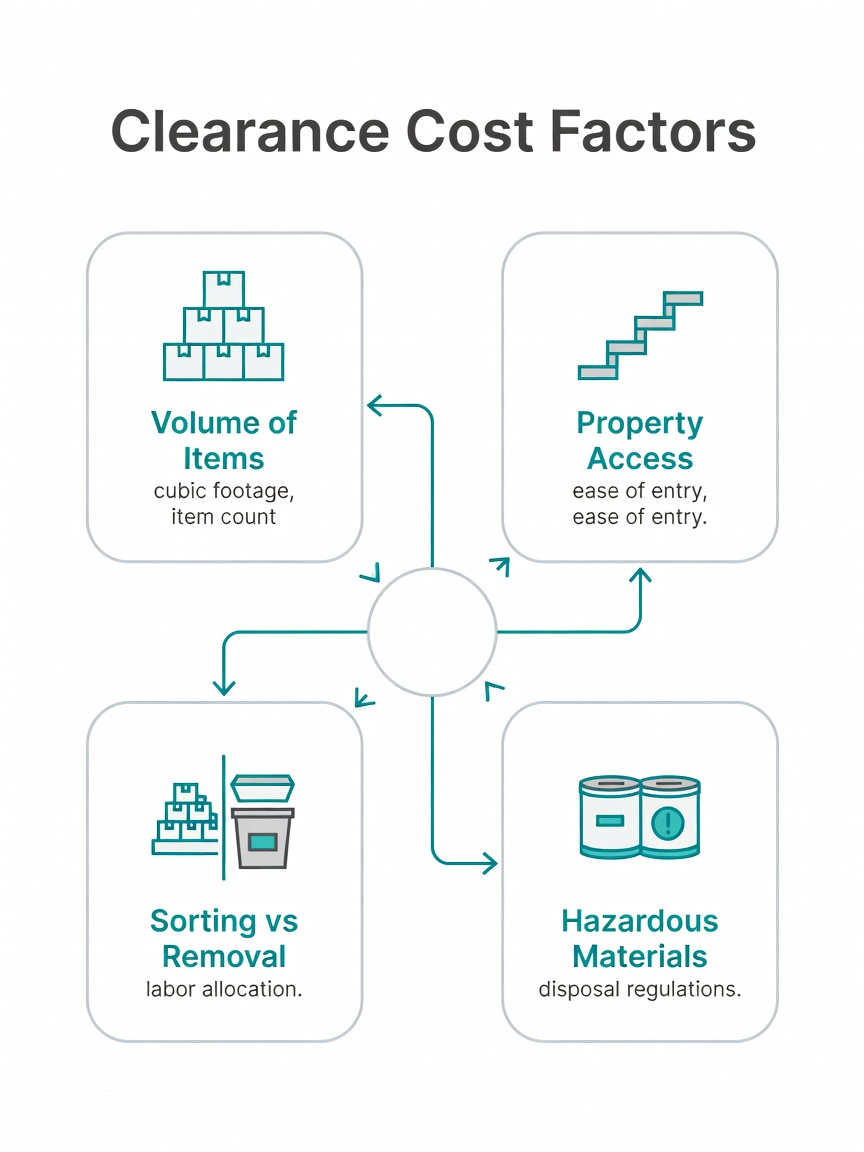
Cost depends on the volume of items, access to the property (a third-floor flat with no lift costs more than a bungalow with a driveway), whether hazardous items like old paint tins or gas canisters are involved, and how much sorting versus straight removal is needed.
Complete Versus Partial Clearance
A complete clearance, emptying the whole property including lofts, sheds and garages, will naturally cost more than a partial one where family have already taken what they want and just need the rest gone. Some families split the job deliberately, doing the sentimental sorting themselves and bringing in professionals purely for the heavy lifting and disposal.
Getting Quotes From Reputable Firms
Get at least two or three quotes, ask specifically how they handle found valuables and cash, and check they’re a properly registered waste carrier, which you can actually verify yourself through the Environment Agency’s public register of waste carriers. It takes five minutes and it’s saved more than one family from an unlicensed operator dumping things illegally under their name.
What Happens To The Items After Clearance
Charity Donation And Recycling
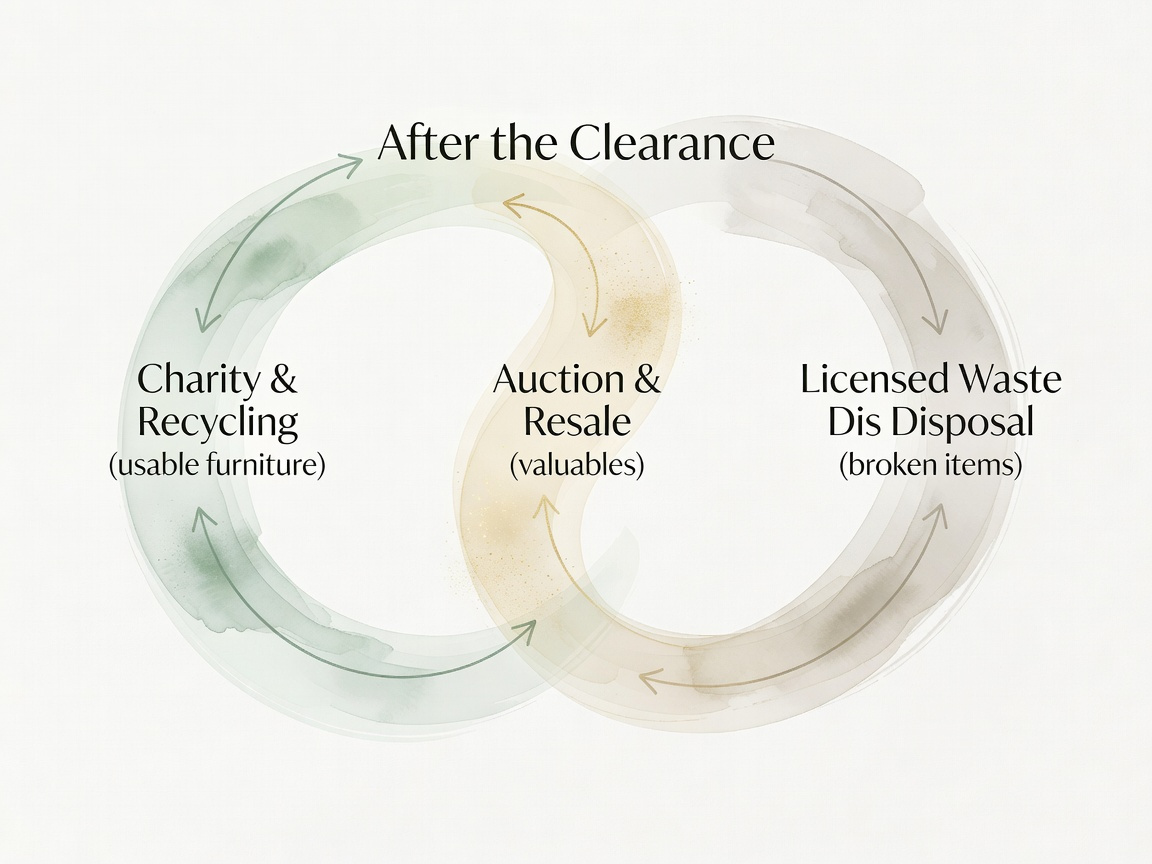
A lot of usable furniture and household goods go to charity shops or local reuse schemes rather than landfill, which tends to sit better emotionally with families than watching a loved one’s belongings get skipped. Independent cost analysis from firms like Farra often notes this is one of the more overlooked benefits of understanding an established clearance service over a cheap man-with-a-van.
Auction Or Resale Of Valuables
Genuinely valuable items, antiques, collectables, decent jewellery, often go through auction houses rather than being sold off cheaply on the spot, which matters both for getting fair value and for keeping a clean paper trail for probate purposes.
Responsible Waste Disposal
Whatever’s left, broken furniture, worn carpets, general household waste, needs disposing of through licensed waste routes, not fly-tipped or taken to a scrap dealer who doesn’t ask questions.
How Do You Choose A Trustworthy Clearance Company
Ask how long they’ve operated, whether they’re insured, how they handle sentimental finds, and whether they can provide a breakdown of costs before starting rather than after. A good place to start structuring those questions is a checklist on choosing a bereavement clearance service, since the right questions upfront save arguments later.
Should Family Members Be Involved In The Clearance

Some, yes. Everyone, no. My honest view is that a full house clearance isn’t a family outing, and children in particular don’t need to be dragged along to watch their grandmother’s belongings get bagged up for the tip. One or two family members, ideally the ones who can stay reasonably level-headed, is plenty. Everyone else can be involved in decisions about specific items without needing to physically be there for the whole process, which tends to reduce both the exhaustion and the arguments, especially when clearing a property remotely.
Follow-Up Questions Readers Often Ask
Do you need probate before clearing the house at all? Not always, but if there’s any estate of meaningful value, it’s safer to wait or at least get a valuation done first. Can you clear the house before the funeral? Legally yes, though most families find it too emotionally raw to start that soon anyway. What if siblings disagree about what to keep? A written inventory, agreed before anything’s removed, tends to prevent most of these disputes before they start.
Conclusion
Clearing a house after a death is never going to feel like a tidy, straightforward job, and honestly, it shouldn’t. Take it slowly, get the legal groundwork sorted before the physical clearing starts, and choose a service that treats found valuables and photographs as something to hand back carefully rather than sweep away. If you want a broader sense of how the whole process fits together from start to finish, there’s a useful step-by-step breakdown of how house clearance works that’s worth reading before you make any calls.